



IT Service Catalog
Streamline IT Service Requests
What is an IT service catalog?
An IT service catalog is a directory of all the services that an IT team offers its end users, with relevant information such as the expected duration of service delivery, the associated operational costs , and approvals.
Service catalog can be of two types.
Service catalog can be of two types.
1. Business service catalog
Lists end user facing IT services like provisioning of laptops, request for a new software, etc
2. Technical service catalog
Back-end IT services like server provisioning, software patching, firewall upgrades etc
Why do you need an IT service catalog?
Service catalog best practices in ITSM :

Provide a simple, business-facing description of the service (description)

Identify a service owner (technician, groups)

Service availability (publish to relevant user groups)

Mention service level targets (SLAs)

Define authorization, escalation, and notification policies (Approval details, notification rules)

Specify costs
(additional fields)
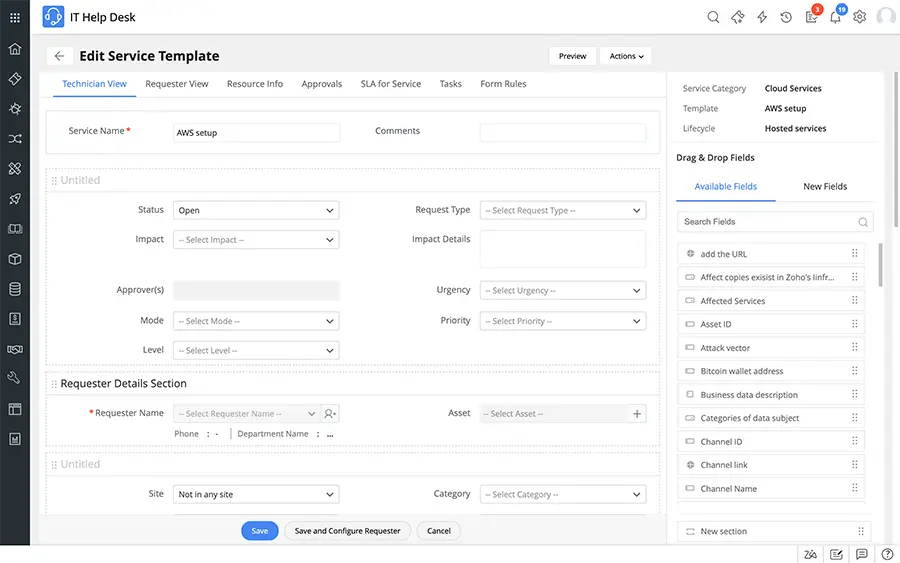
Design and Publish IT Services Quickly
– Create a comprehensive catalog of IT and business services that you offer within minutes.
– Use the drag and drop feature in ITSM to create templates for different services.
– Associate workflows like SLAs, multistage approvals, and tasks to make work easier for service desk technicians.
– Access a wide range of pre-built service request templates and customize them to your needs with minimal effort.
– Associate workflows like SLAs, multistage approvals, and tasks to make work easier for service desk technicians.
– Access a wide range of pre-built service request templates and customize them to your needs with minimal effort.
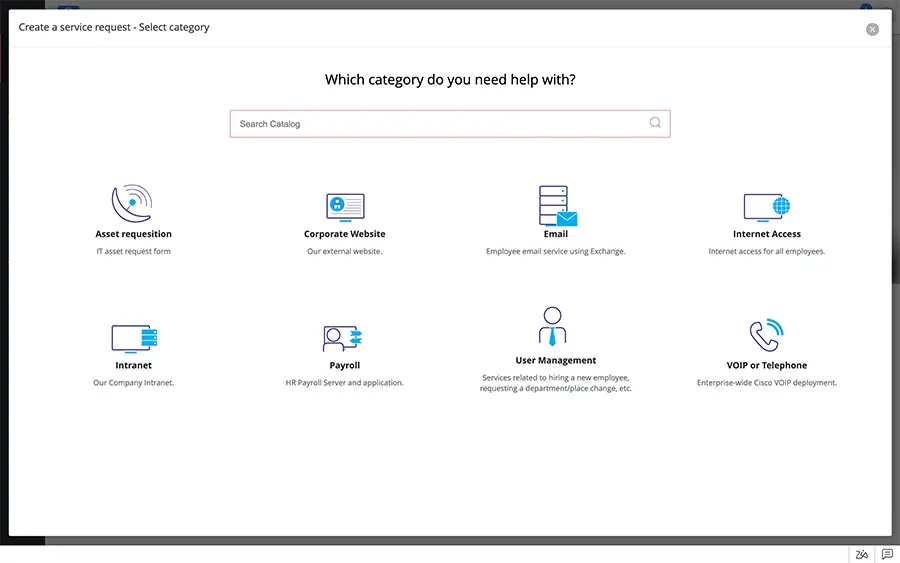
Drive a Compelling Shopping Experience
– Provide a personalized experience for end users in the self-service portal by presenting only those services that the end users are entitled to or those that are relevant to their role.
– Promote self-help and improve operational efficiency.
– Allow users to create and track their service requests on the go.
– Keep end users informed at every step for better visibility and transparency.
– Provide anytime, anywhere access to end users by showcasing the service catalog in the self-service portal.
– Promote self-help and improve operational efficiency.
– Allow users to create and track their service requests on the go.
– Keep end users informed at every step for better visibility and transparency.
– Provide anytime, anywhere access to end users by showcasing the service catalog in the self-service portal.
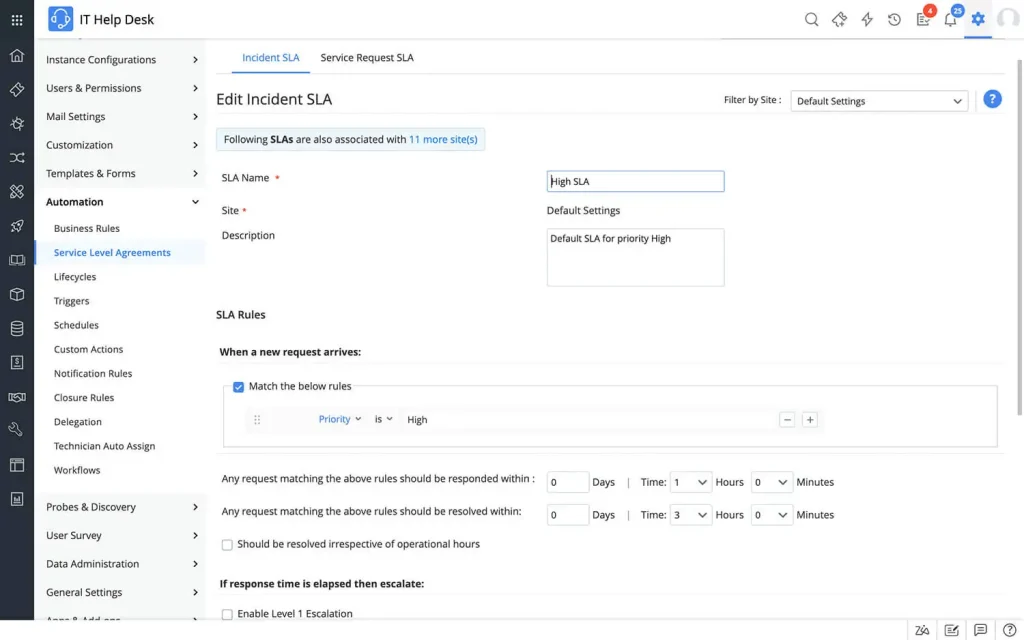
Automate for Efficiency.
Optimize IT Service Delivery.
– Provide a personalized experience for end users in the self-service portal by presenting only those services that the end users are entitled to or those that are relevant to their role.
– Promote self help and improve operational efficiency.
– Allow users to create and track their service requests on the go.
– Keep end users informed at every step for better visibility and transparency.
– Provide anytime, anywhere access to end users by showcasing the service catalog in the self-service portal.
– Promote self help and improve operational efficiency.
– Allow users to create and track their service requests on the go.
– Keep end users informed at every step for better visibility and transparency.
– Provide anytime, anywhere access to end users by showcasing the service catalog in the self-service portal.

Ready to Elevate Your Global Infrastructure?
Contact Our Enterprise Engineers for a Free Consultation
Maximize your network performance, mitigate cybersecurity risks, and scale your operations with GOIP’s tailored B2B solutions. Schedule a comprehensive architecture review with our expert engineers today.